

Now You See Me Moria, photography campaign for the major refugee in Lesbos, Greece.
Words and pictures
Following a traditional model of publishing photographs, I always shared my pictures accompanying them with details of the equipment I used and my exposure settings for that particular image.
This sort of standard is widely used my photographers due the fact that most famous prize awards use it as a way to present images and professionals.
But there were moments I did considered, planned, and carefully wrote captions and texts that were used with my pictures. Especially when these images were associated with causes the results of likes or comments in the social media used would highly increase.
When working with fundraising, captions and additional texts to the image were always crucial to better guide the viewer to a specific action.
If it was to share, subscribe or donate, unless the image was photoshop edited and extra information was added on it, people would react as expected if it was not by the captions and informational text after it.
Sometimes, too much information (texts, titles, or captions) caused the opposite expected reaction.
Living on an era of massive overflow of information due the way social media and communication outputs work nowadays, people get distracted and disinterested very quickly.
A little mystery or curiosity is then very necessary so people can in fact spend time looking to an image trying to decode it.
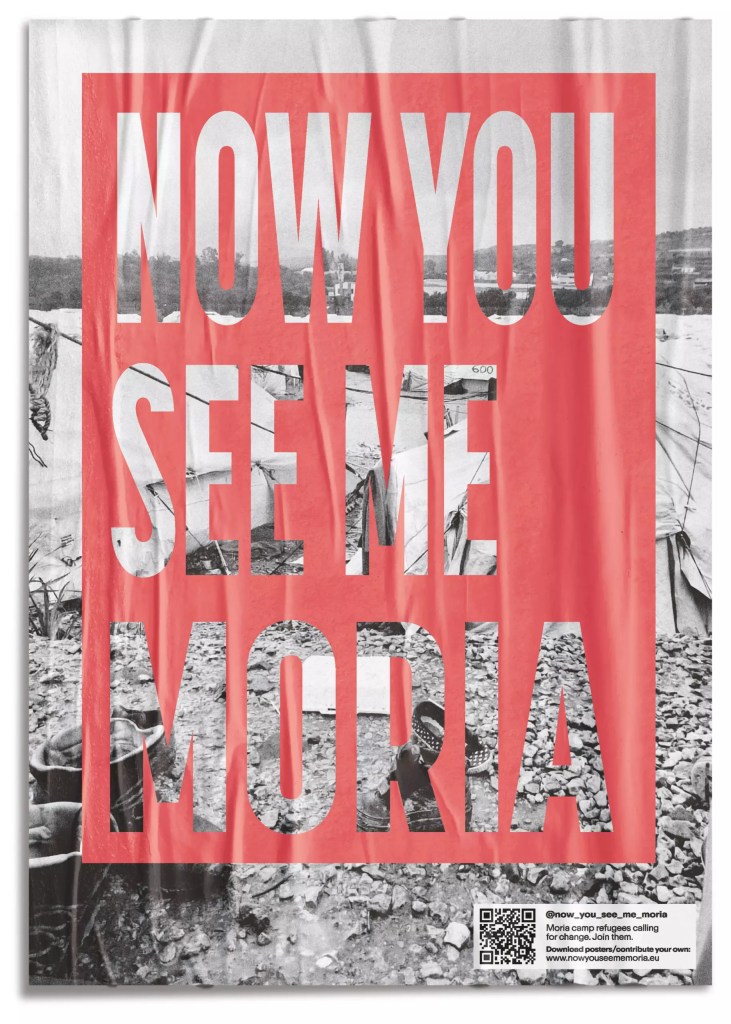
A good example of mixing text to image is the campaign Now You See Me Moria that uses photography, typography, and social media to give voice to the giant refugee camp in Lesbos. See the campaign’s gallery here: https://www.1854.photography/2021/04/now-you-see-me-moria/.
 Homero Aziz